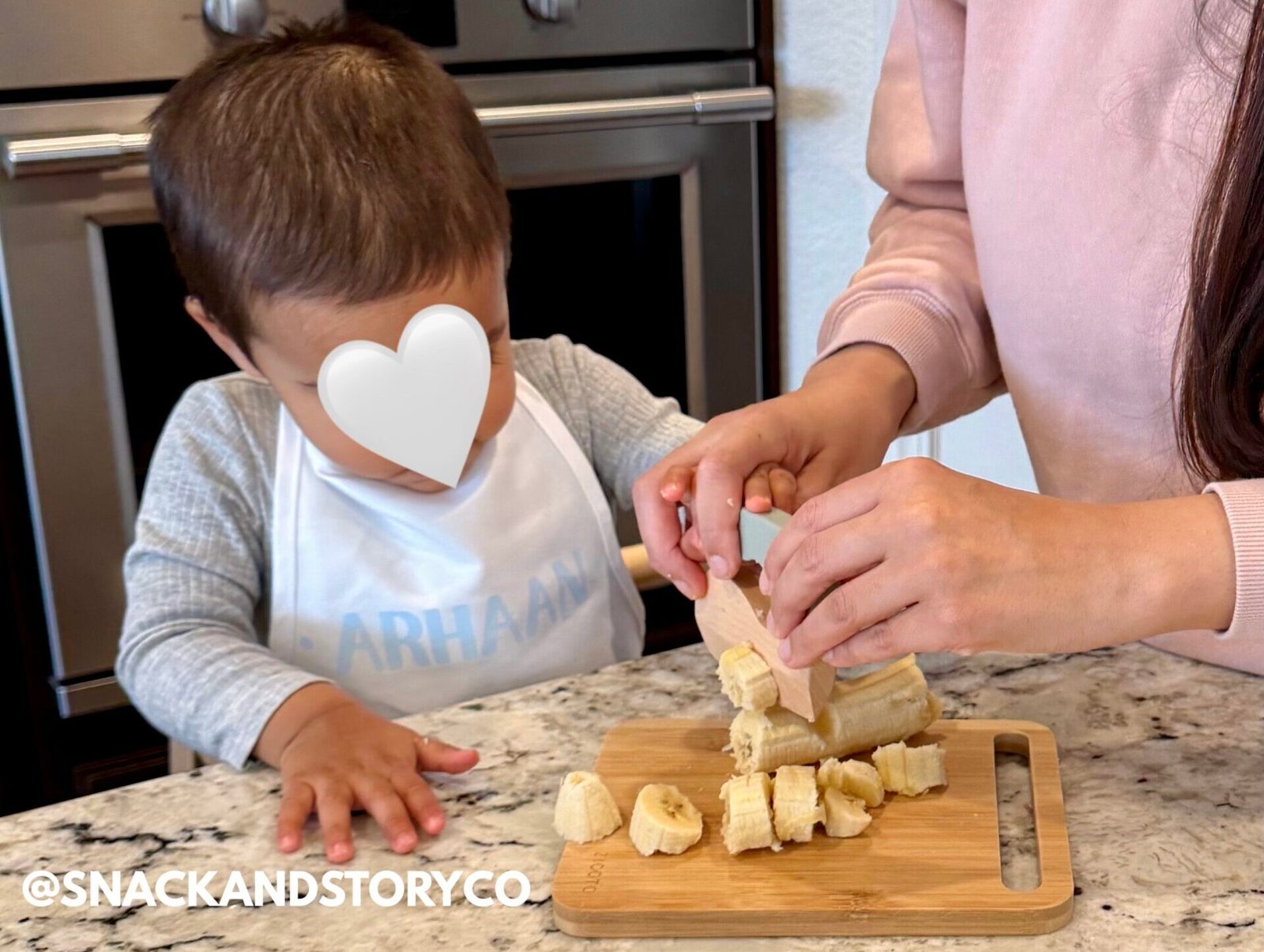
You ask if they want a banana, and they reach for the counter. You mention bath time, and they walk to the bathroom. They’re not saying much, but somehow, they know exactly what you mean.
Before the words come, there’s something else—understanding. And even if your toddler isn’t talking much yet, that doesn’t mean they’re not learning language. In fact, comprehension usually comes first.
Here are four signs your toddler understands more than they’re saying, and simple ways you can support their growing communication skills through your everyday routines.
1. They Follow Simple Instructions
When your toddler hears a familiar phrase like “get your shoes” or “put this in the trash,” and they respond, that’s language comprehension at work. They may not be able to say the words yet, but they’re connecting meaning with sound, action, and routine. This is called receptive language, and it’s the foundation for speech and social communication.
Even short, one-step directions help build your child’s internal vocabulary. Over time, repetition strengthens those mental connections. By understanding what words mean in context, toddlers begin to organize language in their brains long before they speak it out loud.
How to continue supporting your child:
- Use simple, consistent language during your daily routines.
- Give short directions and pair them with visual cues or gestures when possible. You might say, “Let’s find your shoes,” while pointing toward the hallway, or “Put it in,” while handing them a toy and motioning to a bin.
- Try not to quiz—instead, treat language as part of everyday communication.
2. They React to Tone and Emotion
Toddlers may not know every word, but they’re experts at tuning into the sound and feeling behind your voice. That pause when you say “uh-oh,” the way they freeze when you say “no” sharply, or how they smile when you use a playful tone—these responses show that your child is already interpreting social and emotional meaning through your voice and face.
Language is more than vocabulary. It’s also tone, timing, and body language. By picking up on your emotional cues, your toddler is learning that language carries both information and feeling.
How to continue supporting your child:
- Use expressive speech and match your tone with your intention.
- Speak calmly when redirecting, warmly when praising, and slowly when introducing something new.
- Pair your voice with facial expressions to help your child link emotions with words.
- You can also name their emotions in the moment: “You’re frustrated. You really wanted to keep playing.” This helps build both language and emotional understanding.
3. They Use Gestures to Communicate
Before toddlers speak, they often rely on gestures. Pointing to the fridge, reaching for a toy, holding up a cup—these are all signs they’re thinking intentionally about what they want and how to share it. Gestures are not just body movements. They’re a key step in language development, helping toddlers link words with objects, people, and ideas.
Children who use more gestures in infancy tend to develop larger vocabularies later on. By encouraging these early communication cues, you’re creating space for language to grow.
How to continue supporting your child:
- Acknowledge and respond to gestures with words. If they point to the snack shelf, you might say, “You’re pointing to the crackers. Want some?” Responding to these nonverbal cues helps toddlers feel heard—and builds their confidence to try new ways of communicating.
- You can also model gestures yourself—point to objects while naming them, wave hello or goodbye, or use your hands to show “all done.”
- Treat gestures as real communication, not just a placeholder for speech.
4. They Show Interest When You Talk
When your toddler pauses to watch your face, lights up when you say their name, or looks toward an object you’ve mentioned, they’re showing active listening. Even if they’re not responding with words, they’re participating. This interest in language—watching your mouth move, following your gaze, responding to your tone—shows that they’re beginning to grasp the flow and structure of conversation.
This quiet engagement is where comprehension builds. Language development isn’t just about practicing sounds. It’s also about taking in words over time, in meaningful, connected ways.
Reading books, singing songs, and simply talking through your routines gives them rich language exposure, even if they seem quiet.
How to continue supporting your child:
- Talk to your toddler throughout the day. Narrate what you’re doing, describe what they’re seeing, and name familiar objects.
- Don’t worry about repetition—toddlers learn through hearing the same words in new contexts.
- You can also build in short pauses to give them space to respond, even if that response is just a glance or a gesture.
- Reading books, singing simple songs, and repeating favorite rhymes are all ways to help language take root.
The Takeaway
Understanding language is an important milestone, even if it’s invisible at times. If your toddler is following directions, using gestures, watching your face, or responding to tone, they’re already building the skills they need to communicate.
You don’t need flashcards or apps or a perfect script. You just need to keep connecting, talking, and tuning in. Language is built through everyday interaction, not performance.
At Snack & Story Co., we believe early communication starts in the ordinary—at the breakfast table, in the car seat, during bedtime books. Your toddler may not be talking much yet, but they’re building their voice every time you speak with love and intention. Keep going. They’re listening.
Learn More About the Research
These sources explore early language development, comprehension milestones, and the link between receptive language and later speech:
Benedict, H. (1979). Early lexical development: Comprehension and production. Journal of Child Language, 6(2), 183–200
Carpenter, M., Nagell, K., & Tomasello, M. (1998). Social cognition, joint attention, and communicative competence from 9 to 15 months of age. Monographs of the Society for Research in Child Development, 63(4), i–174
Huttenlocher, J., Haight, W., Bryk, A., Seltzer, M., & Lyons, T. (1991). Early vocabulary growth: Relation to language input and gender. Developmental Psychology, 27(2), 236–248
Rowe, M. L., & Goldin-Meadow, S. (2009). Differences in early gesture explain SES disparities in child vocabulary size at school entry. Science, 323(5916), 951–953
Tomasello, M. (2003). Constructing a language: A usage-based theory of language acquisition. Harvard University Press
Weisleder, A., & Fernald, A. (2013). Talking to children matters: Early language experience strengthens processing and builds vocabulary. Psychological Science, 24(11), 2143–2152
Zosh, J. M., Hirsh-Pasek, K., & Golinkoff, R. M. (2014). Putting the education back in educational apps: How content and context interact to promote early learning. Developmental Psychology, 50(4), 1340–1352



Leave a Reply