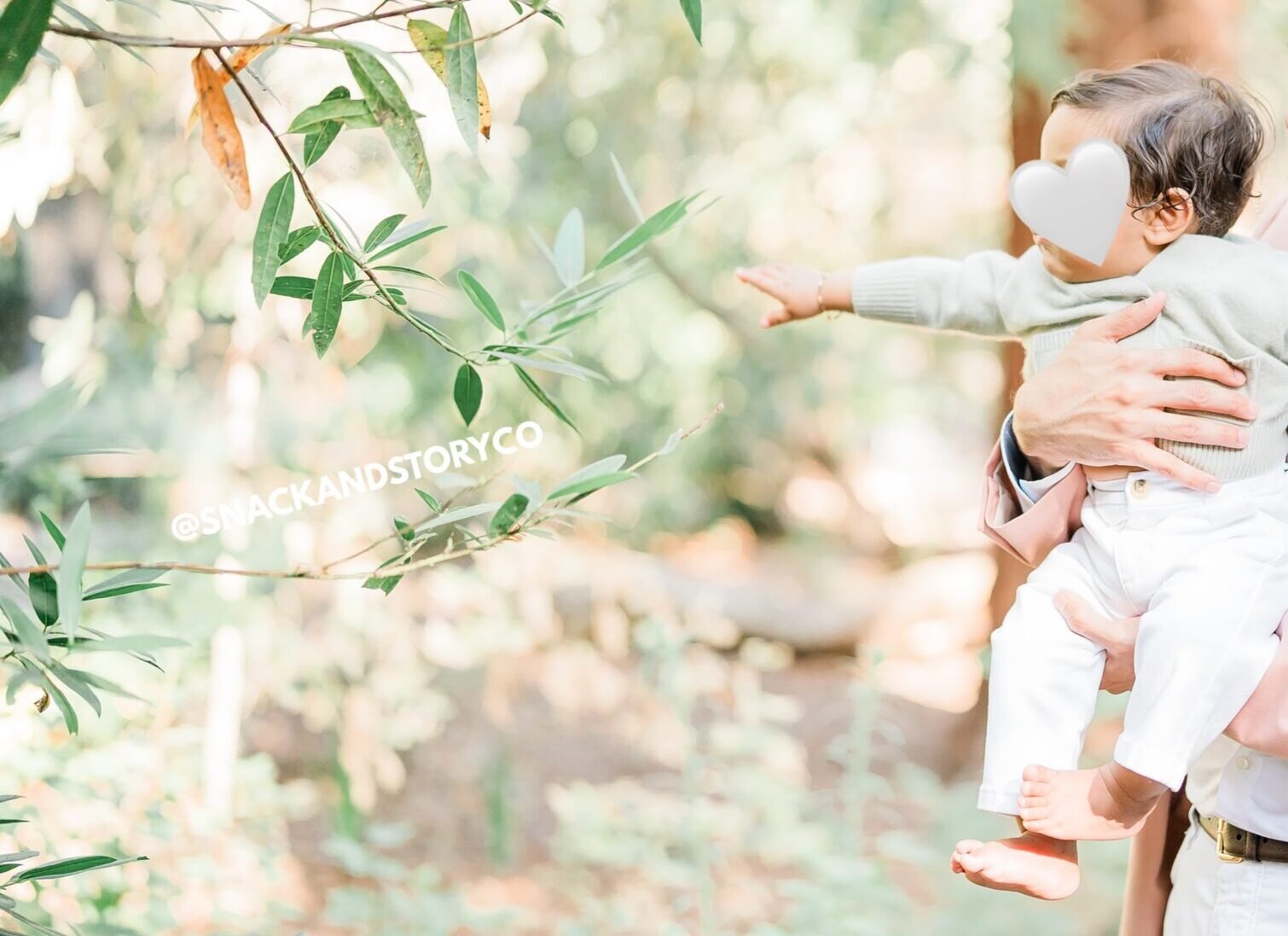
Your toddler doesn’t need a nature curriculum or a packed playground schedule to learn and grow outside. These everyday outdoor adventures—walks, swings, splashes, or just spotting a dog—are full of chances to connect, build language, and help your child feel safe in the world.
Here’s how to turn your next outdoor outing into a language-rich, brain-building moment:
🌿 Neighborhood or Nature Walk
“We’re stepping onto the path. Crunch crunch—leaves under your feet.”
- Narrate sounds, textures, colors: “I hear a bird.” “This leaf is yellow and crispy.”
- Use positional words: “You’re walking behind me. Now beside me!”
- Pause for wonder: “You found a flower! It’s tiny and purple.”
If they want to stop every few steps:
“You’re noticing so many things! Let’s stop for a count of five, then keep going.”
Why it matters: Slow walks support sensory integration, descriptive language, and observational skills. When you name what they notice, you validate their curiosity—and that builds confidence.
🐶 Encountering Animals in Public
“That’s a big dog! He’s wagging his tail.”
- Narrate calmly: “We see a dog. He’s walking with his person.”
- Model safe behavior: “Let’s give the dog space. We wave from here.”
- Label emotions: “You’re curious—and a little unsure. That’s okay.”
If they get scared or too excited:
“It’s okay to feel nervous. You’re safe with me. Let’s hold hands and watch from here.”
If the animal isn’t on a leash or seems unfamiliar:
“That dog doesn’t have a leash—we’ll stay close and keep walking.”
“We don’t know that animal, so we give it space. You’re safe with me.”
If the animal seems stray or unpredictable:
“That kitty is walking alone. We don’t touch, just look.”
“Sometimes animals without people nearby can feel scared. Let’s give them lots of space.”
Why it matters: Animal encounters can be exciting, overwhelming, or unpredictable. Narration helps toddlers regulate emotions, understand boundaries, and learn how to safely and respectfully interact with living things, even from a distance.
🛝 Park or Playground Visit
“You climbed up the steps—one, two, three—and now you’re sliding down!”
- Narrate actions: “You’re climbing, balancing, swinging.”
- Celebrate effort: “You’re trying something new. That takes courage!”
- Name emotions: “You’re smiling so big. That looks fun!”
If they hesitate to join:
“You can watch for now. When you’re ready, I’ll be right here.”
If they struggle with taking turns:
“You slid down! Now let’s let them try—it’ll be your turn again soon.”
“We’re all sharing today. Let’s count to five while we wait.”
If they run without looking or seem unaware of their surroundings:
“Let’s slow our feet—we watch where we’re going so we don’t bump!”
“Oops—almost bumped into them! Let’s keep our eyes up while we run.”
“We can run this way, where there’s space. Over here is our ‘running zone.’”
Why it matters: Playgrounds are full of movement, emotion, and social cues. Narrating helps toddlers stay regulated, understand turn-taking, and build both spatial awareness and body control—skills that keep them safe and confident in active spaces.
🦁 Zoo Visit
“We see the lion—look at his big paws!”
- Narrate observations: “The monkey is swinging.” “The zebra has stripes—black and white!”
- Model sun protection: “Your hat helps keep your face cool. Let’s pull it down just a little.”
- Keep voices gentle: “Let’s talk softly so we don’t scare the animals.”
- Use signs and labels: “This sign says ‘giraffe.’ Look at that long neck!” “This sign says ‘penguin.’ Can you find one?”
If they resist sun gear or start yelling excitedly:
“You can be excited and still use a quiet voice—animals like it calm.”
“Your hat keeps the sun off your face. Let’s try it again together.”
Why it matters: Zoo visits build animal vocabulary, empathy, and attention regulation. Narrating helps toddlers stay calm and safe in stimulating, sun-filled spaces.
🐠 Aquarium Visit
“The jellyfish is floating—so wiggly!”
- Narrate what you see: “The fish are swimming in circles.” “That one is red with shiny fins.”
- Use spatial language: “It’s floating up. Now down!”
- Narrate feelings: “You look amazed! Yes, so many fish!”
If they try to tap on the glass:
“Let’s use our eyes, not our hands. Tapping scares the fish.”
“You can point gently—like this.”
Why it matters: Aquariums are rich sensory spaces. With calm narration and boundary-setting, they’re perfect for practicing observation, self-control, and empathy.
🏖 Beach Visit
“Your toes are in the sand—squish, squish! Let’s walk to the water.”
- Narrate sensory input: “The sun is warm. The sand feels grainy.”
- Use play words: “You’re digging, scooping, pouring.”
- Reinforce boundaries: “The waves come close. We stop at this line together.”
If they run toward the water:
“The water is fun, but we stay close to our grown-up. Let’s hold hands while we splash.”
If they try to eat sand or throw it:
“Sand is for digging, not eating. Let’s use the shovel instead.”
“We keep the sand low—no throwing. That keeps everyone safe.”
Why it matters: Beach play supports sensory exploration, gross motor skills, and environmental awareness. When boundaries are narrated gently, toddlers feel safe and confident exploring.
EXPLORE THE NARRATE THE MOMENT SERIES
Looking for support across other parts of your day? Narrate the Moment is a series of real-life guides designed to help you bring language into everyday routines—without prep, pressure, or perfection. Each post focuses on a different part of daily life, filled with simple narration tips, easy scripts, and ways to turn ordinary moments into opportunities for connection and growth.
Check out the full series:
- ☀️ Morning Routines: waking up, brushing teeth, getting dressed, and more
- 🍽 Mealtime Routines: from hand washing to cleaning up skills
- 🧃 Snack Time & Midday Transitions: narrating everyday errands
- 🧼 Self-Care Routines: hair brushing, lotion, nails, runny noses, and even medicine
- 🧸 Play & Downtime: supporting independent play and clean-up routines
- 🌙 Evening Routines: bath time, pajamas, and calming phrases to end the day
- 🎒 On the Go – Big Transitions, Appointments & Social Moments: goodbyes, doctors visits, birthday parties and crowded events
Everyday routines are already full of meaning—these guides just help you put it into words.
WE WANT TO HEAR FROM YOU
Outdoor time is filled with fresh air & full of firsts. New textures, new sights, new challenges.
By narrating what your child sees, feels, and explores, you’re building language, connection, and trust in their environment.
Try narrating your next outdoor moment and tell us: What did your little one discover today?

Leave a Reply