Stacking is one of those milestones that quietly appears in toddlerhood—and suddenly, it’s everywhere. Blocks on blocks, bowls inside bowls, pegs in holes. But what looks like simple play is actually a workout for your child’s motor skills, problem-solving brain, early math understanding, and emotional resilience.
Whether your toddler is stacking two blocks or building a wobbly 6-piece tower before proudly knocking it down, they’re doing a lot more than playing. They’re experimenting, observing, coordinating—and trying again.
Let’s unpack how stacking develops, why it matters, and how you can help your child get the most out of this powerful little activity.
When do children start stacking?
Stacking doesn’t begin the way you might expect—not with neat towers, but with messy trial and error. Around 9 to 10 months, babies begin to develop the ability to voluntarily release objects. That means they can begin placing, not just grabbing. At first, they might drop a spoon into a bowl or plop a ring near a peg. But these clumsy experiments are early signs of control.
By 12 months, you might see a child try to place one object on top of another. And by 15 to 18 months, many toddlers can stack two or three blocks. By 2 years, four to six blocks are common, and by age 3, some children begin making deliberate choices about balance and size to build taller structures.
It’s a slow, exploratory process—and most of it happens through repetition and joyful play.
Why stacking matters
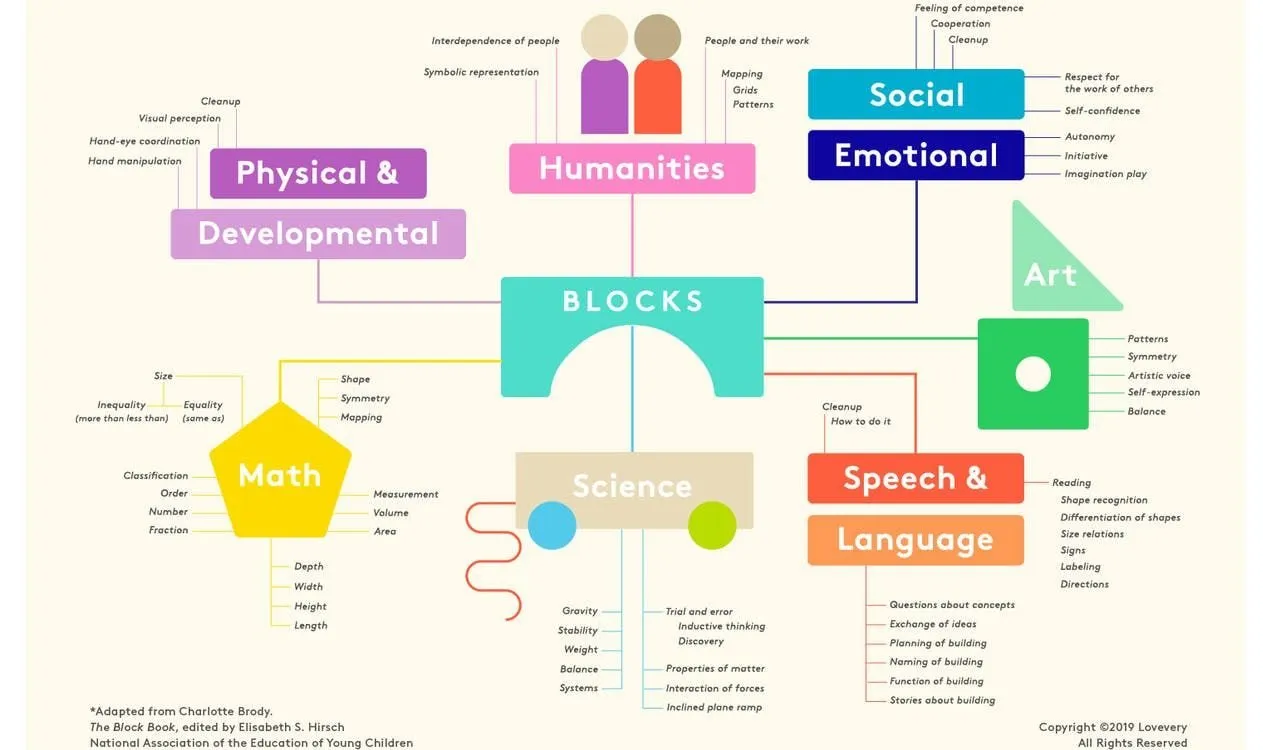
Stacking offers more than meets the eye. It helps develop:
- Fine motor skills: Placing one object carefully on another requires hand strength, dexterity, and precise control.
- Hand–eye coordination: Toddlers must visually judge space and aim, then use their muscles to match that plan.
- Spatial awareness: Every tower that wobbles teaches something about balance, structure, and gravity.
- Early math skills: Concepts like “bigger/smaller,” “tall/short,” counting, and size sequencing emerge naturally during stacking.
- Cognitive flexibility: Stacking involves planning, testing, and adjusting—a loop of trial and error that builds problem-solving skills.
- Emotional regulation: There’s no better lesson in resilience than watching your hard-built tower tumble… and choosing to try again.
Even socially, stacking can turn cooperative—when a caregiver or sibling joins in, it becomes a shared project. One block at a time.
How to support stacking at home
This doesn’t require a Pinterest-worthy playroom. In fact, your child learns best when stacking is casual, repeatable, and part of everyday life. Here’s how to help:
1. Start before they can actually stack.
At 7 to 10 months, let your baby explore stacking materials—cups to bang together, bowls to place inside one another, soft blocks to mouth and drop. You’re introducing materials and cause-and-effect through playful exposure.
2. Narrate and participate.
“You stacked one block. Let’s try another!” or “You put the bowl inside. That’s called nesting.” These small comments give language to their actions and make learning feel connected.
3. Let them knock it down—on purpose.
Tearing towers apart is part of the process. It helps children learn what went wrong, rebuild from scratch, and enjoy the drama of destruction. For some kids, knocking it over is the best part.
4. Add just enough challenge.
Once your child can stack two, offer materials that vary slightly in size or shape. Let them problem-solve. Use foam blocks, wooden cubes, nesting cups, peg boards, or even stacking animals.
5. Stack alongside them.
Sometimes kids learn best by watching. If your child seems unsure, try building your own small tower nearby. Don’t prompt—just model. The invitation is there if they’re ready.
6. Count and compare.
“This one’s bigger… this one’s tiny!” “One, two, three blocks!” You’re layering early math into everyday play.
7. Mix in real-life materials.
You don’t need specialty toys. Try plastic cups, yogurt containers, or books. Bonus: it teaches flexibility and creativity in how they approach the task.
8. Encourage creative variations.
Can you make a bridge with two stacks and a block across the top? Can you stack different colors or stack by size? Invite imagination but also follow their lead.
9. Keep it low-pressure.
There’s no rush to build a perfect tower. Celebrate effort, not outcome. “You kept trying even when it fell—that’s stacking bravery.”
The Takeaway
Stacking isn’t just about what your child builds—it’s about what they learn along the way. Each wobbly block is a lesson in balance. Each toppled tower is a chance to try again. Each shared moment is a step toward confidence, coordination, and curiosity.
At Snack & Story Co., we believe everyday play—like stacking—is where real development lives. Through slow repetition and joyful messes, your toddler is building more than towers. They’re building persistence, math skills, creativity, and connection. One block at a time.
Learn More About ThE Research
Adolph, K. E., & Berger, S. E. (2015). Physical and Cognitive Development in Infancy and Toddlerhood. In R. M. Lerner (Ed.), Handbook of Child Psychology and Developmental Science.
Bayley, N. (2006). Bayley Scales of Infant and Toddler Development (3rd ed.). Harcourt Assessment.
Case-Smith, J., & O’Brien, J. (2014). Occupational Therapy for Children and Adolescents. Elsevier.
Campos, J. J., et al. (2000). Infant Development: The Essential Readings. Blackwell.
Ginsburg, K. R. (2007). The Importance of Play in Promoting Healthy Child Development and Maintaining Strong Parent–Child Bonds. Pediatrics, 119(1).
Hirsch, E. S. (Ed.). (1996). The Block Book (3rd ed.). National Association for the Education of Young Children.
National Association for the Education of Young Children (NAEYC). (2020). Developmentally Appropriate Practice in Early Childhood Programs.
Parks, S., & Pisani, L. (2009). Supporting Development Through Play. Gryphon House.



Leave a Reply